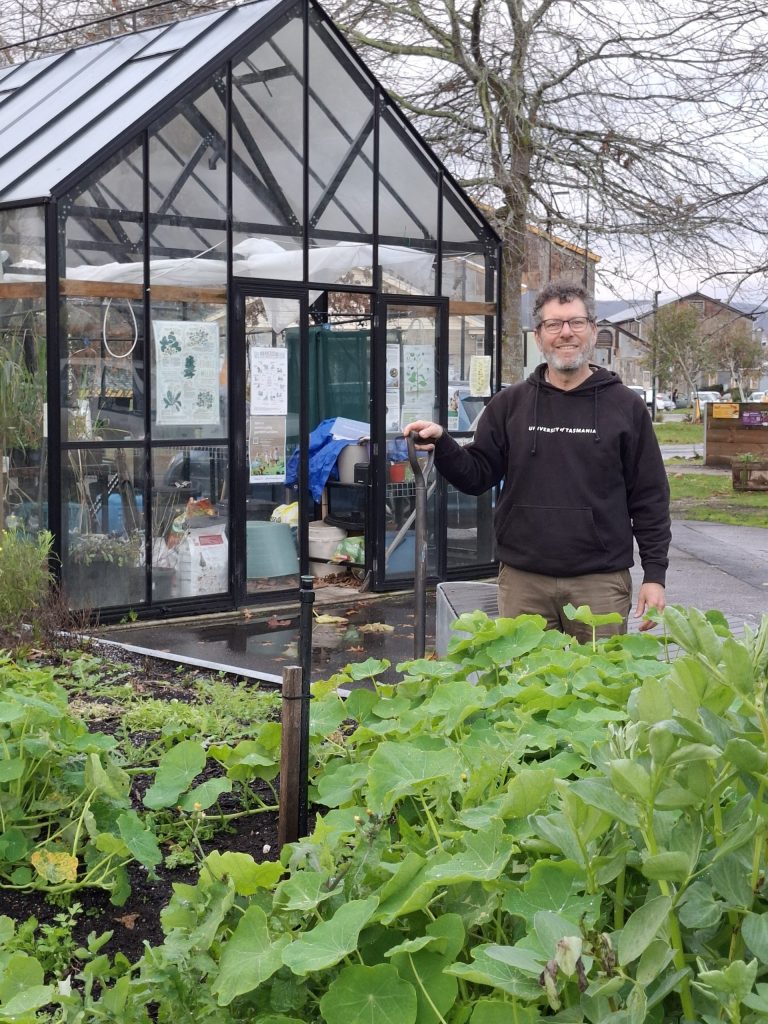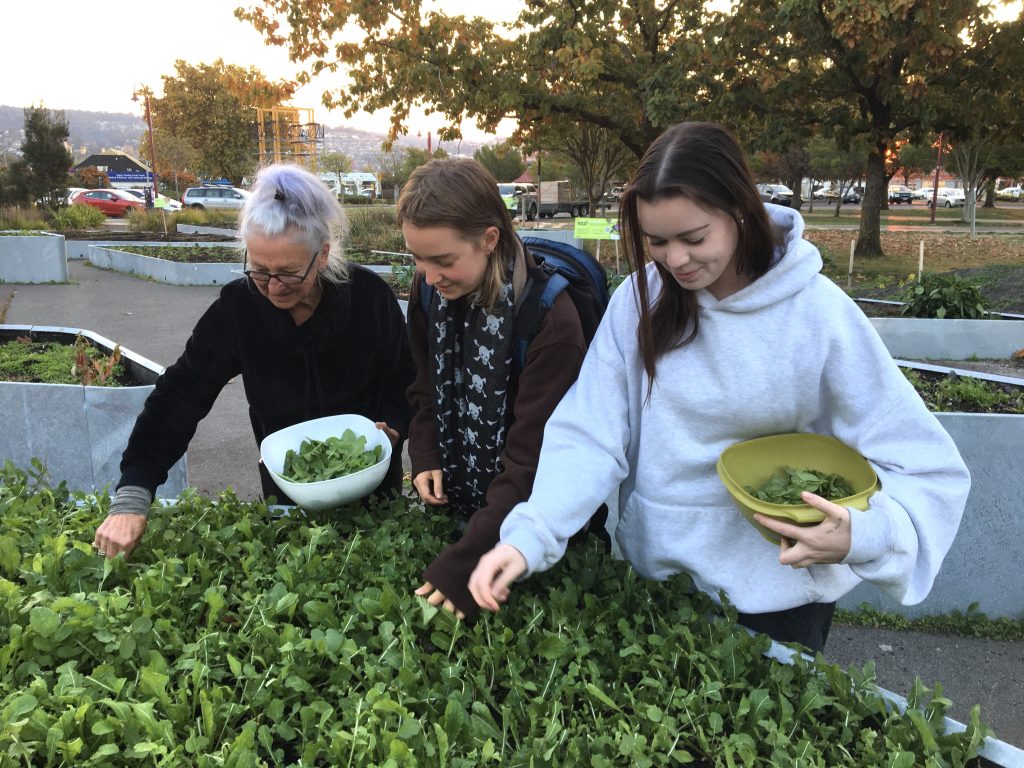
From heritage fruit trees to native bushfoods, the University of Tasmania’s community and student food gardens are doing far more than growing vegetables. Across campuses, they’re helping students discover where food comes from, learn lifelong skills and build meaningful connections with each other and nature.
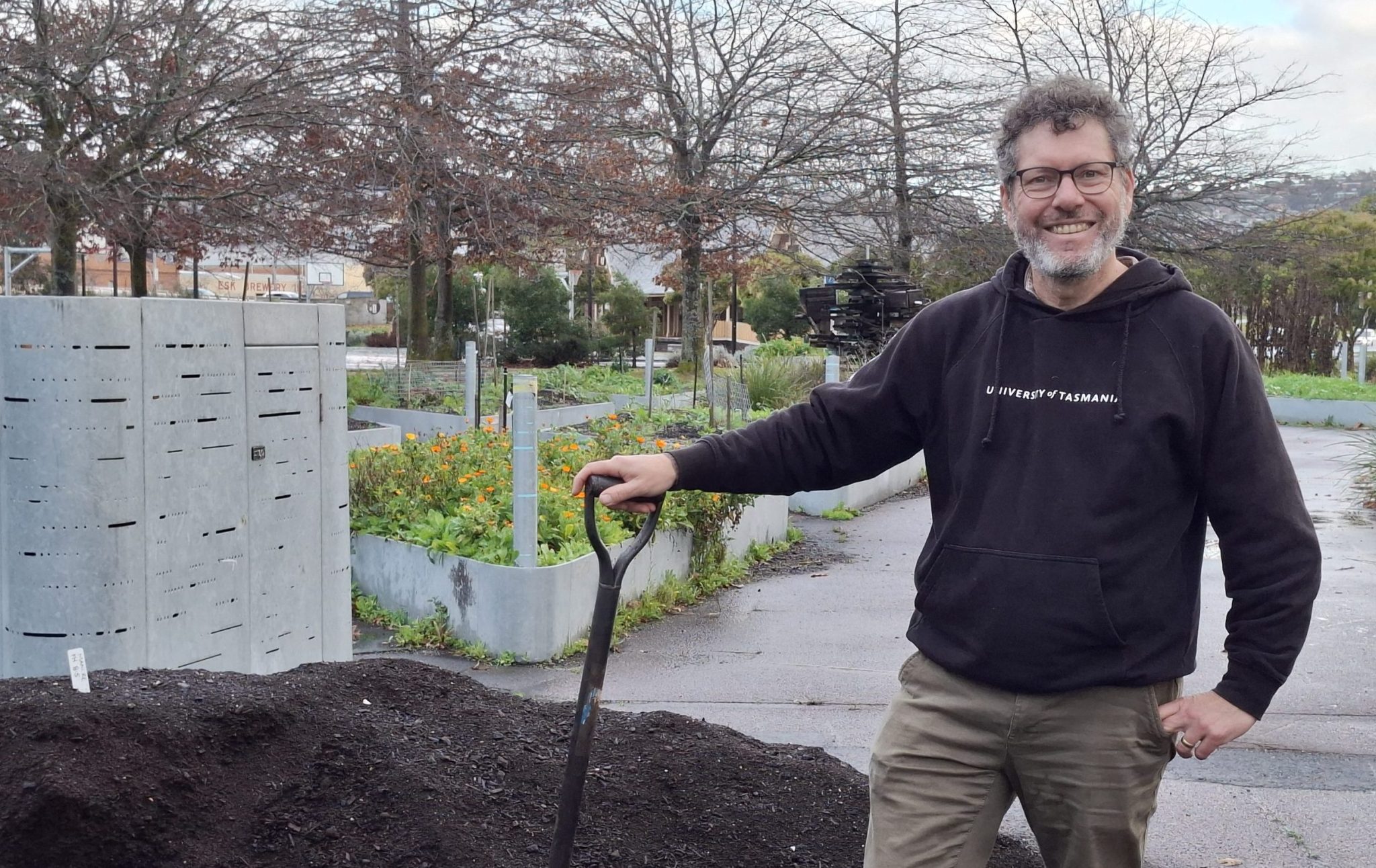
We spoke with the Jeff McClintock, the university’s Community Garden Coordinator about the gardens, the people who bring them to life, and the remarkable stories that have grown from them.
What are the University of Tasmania community and student food gardens, and why were they created?
The community and student food gardens are part of the University of Tasmania’s Edible Campus Program, which aims to grow a wide variety of food plants across campuses throughout the state.
While producing fresh food is an important part of the program, the gardens were created with a much broader purpose in mind.
Food insecurity affects many people in Tasmania, including university students, staff and the wider community. The gardens provide opportunities for people to harvest fresh produce, but just as importantly, they help them learn the skills to grow their own food.
For students, that means much more than planting seeds. They learn how to nurture plants, recognise when produce is ready to harvest and, importantly, how to prepare and cook what they’ve grown.
It’s about giving people the confidence to grow, harvest and enjoy their own food.
Many people think of community gardens as rows of vegetable beds. What else can visitors discover in these spaces?
The Edible Campus Program takes a much broader view of what an edible landscape can be.
Alongside seasonal vegetables, the gardens feature Tasmanian native food plants including pepperberry, saltbush and pigface, whose sweet, slightly salty fruit often surprises first-time tasters with flavours reminiscent of kiwi fruit and figs.
The University also cares for a heritage orchard at the Newnham campus in Launceston, home to around 60 fruit trees, including rare heritage apples and pears dating back to the 1800s.
Another exciting part of the program is foodscaping – transforming traditional ornamental gardens into productive edible spaces.
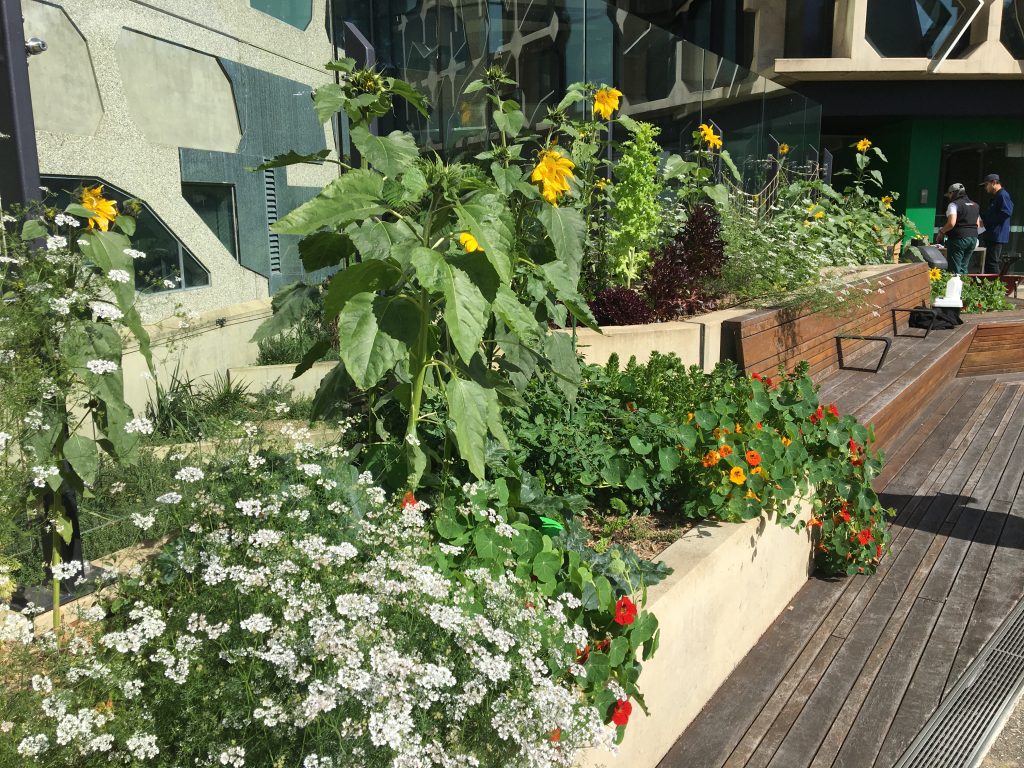
One example is the Medical Science Precinct in Hobart, where a tired courtyard has been reimagined into a thriving food garden filled with fruit trees, citrus and seasonal produce. Supported by an enthusiastic group of staff volunteers, it has become a vibrant green space right in the heart of the city.
We’re showing that food can be grown almost anywhere – not just in traditional vegetable gardens.
Have you seen any memorable friendships, community connections or personal transformations emerge from the gardens?
Absolutely! One Launceston student first wandered into the gardens while watching from a distance as volunteers worked. After being invited to help dig, she discovered gardening was exactly what she needed.
She later shared that she’d been struggling with her mental health and believed spending time in the gardens could help.
Over the following two years she became one of the group’s most active members.
The transformation was remarkable.
The confidence she gained eventually led her to participate in an international university exchange program in the United States – something she admits she would never have considered before joining the gardens.
Another memorable story involved an international student from Hong Kong who had grown up in a high-rise apartment and had never gardened before.
She was literally trembling with excitement when she attended her first gardening session. She quickly embraced gardening, combining her love of cooking with freshly harvested produce and regularly sharing photos of the meals she’d created.
The friendships she built proved just as meaningful.
When she later moved interstate and got married, she invited the entire student gardening group to her wedding!
What surprises people most when they get involved for the first time?
For many people, particularly those who have grown up disconnected from nature, it’s simply discovering that things like soil and compost aren’t something to fear.
For example, there’s often a perception that compost is ‘dirty’ because it’s made from food scraps. In reality, good compost is alive, healthy and full of life.
I often say good compost smells like a walk in a damp forest.
Helping people overcome that hesitation – whether it’s touching soil for the first time or discovering that compost worms are friends rather than something to avoid – is often one of the first and most rewarding steps in their gardening journey.
What has been one of the most rewarding success stories you’ve experienced through the program?
One student joined the Inveresk gardening group having never grown food before.
Over the next couple of years they learned the fundamentals of gardening while living in student accommodation.
When they later moved into private accommodation with a small yard, they put those new skills into practice and started growing their own food.
The following autumn they returned to the University gardens carrying an enormous pumpkin they’d grown themself!
They’d gone full circle – from learning how to grow food with the student gardening group to bringing their own harvest back to share with the group.
How do the gardens help students and community members better understand where their food comes from?
Simply having the gardens in prominent locations around campus sparks curiosity.
Students pass them every day, stopping to wonder what different plants are, or discovering, sometimes for the first time, what vegetables actually look like growing in the ground.
The University also works closely with academic programs and visiting school groups, creating opportunities for students from disciplines including architecture and design to contribute to the gardens while learning about sustainable food systems.
One particularly memorable visit involved a group of students from Taiwan.
Many had grown up in densely populated cities and had never seen vegetables growing before.
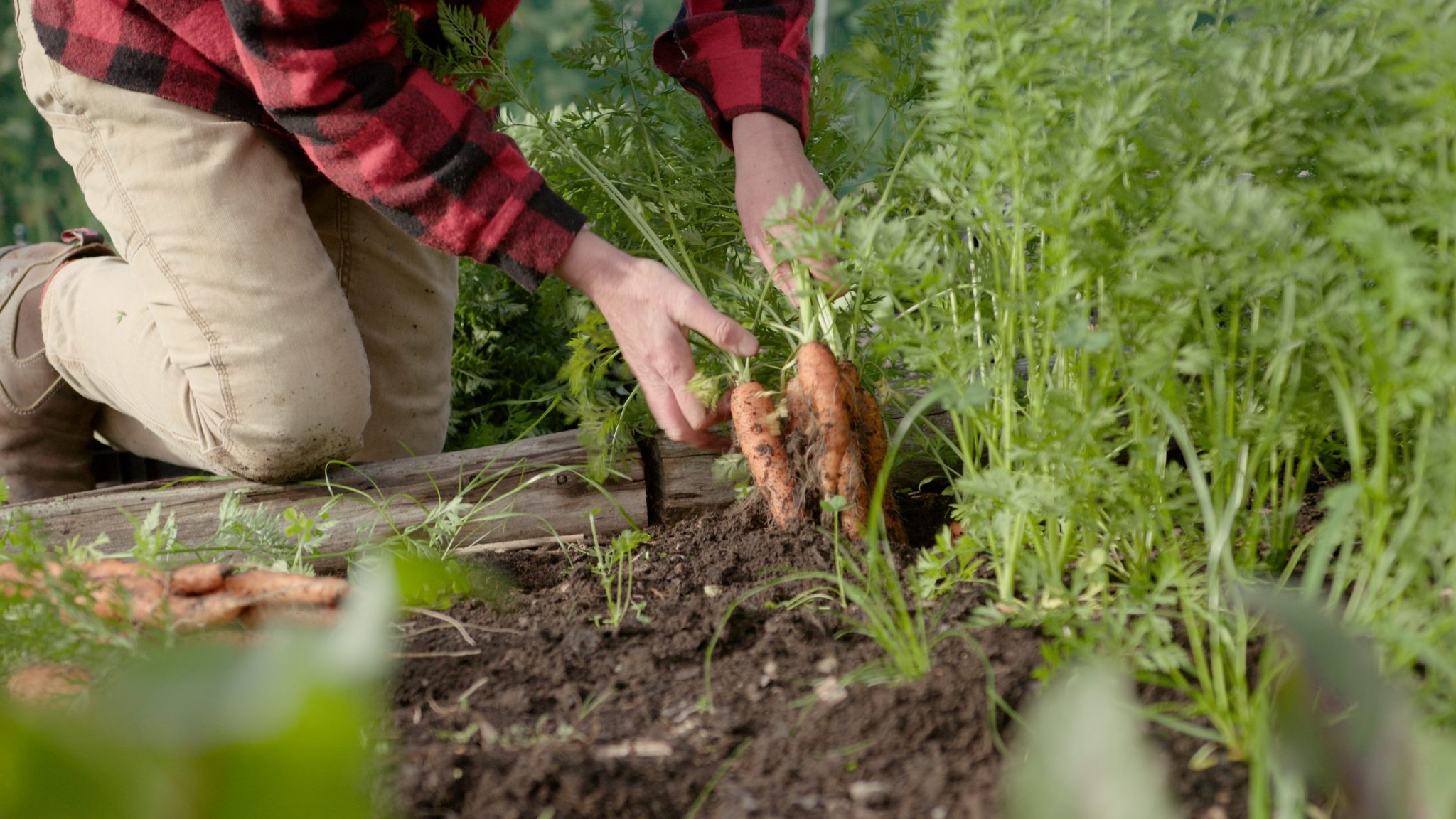
When the first carrot was pulled from the ground, the group erupted with excitement.
They squealed, pulled out their phones to film it, and every carrot after that got the same reaction. They all wanted to take a carrot home as a souvenir.
Moments like these remind us just how disconnected many people have become from the origins of their food – and how powerful it can be to reconnect.
If someone has never grown anything before, what would you recommend?
Keep it simple.
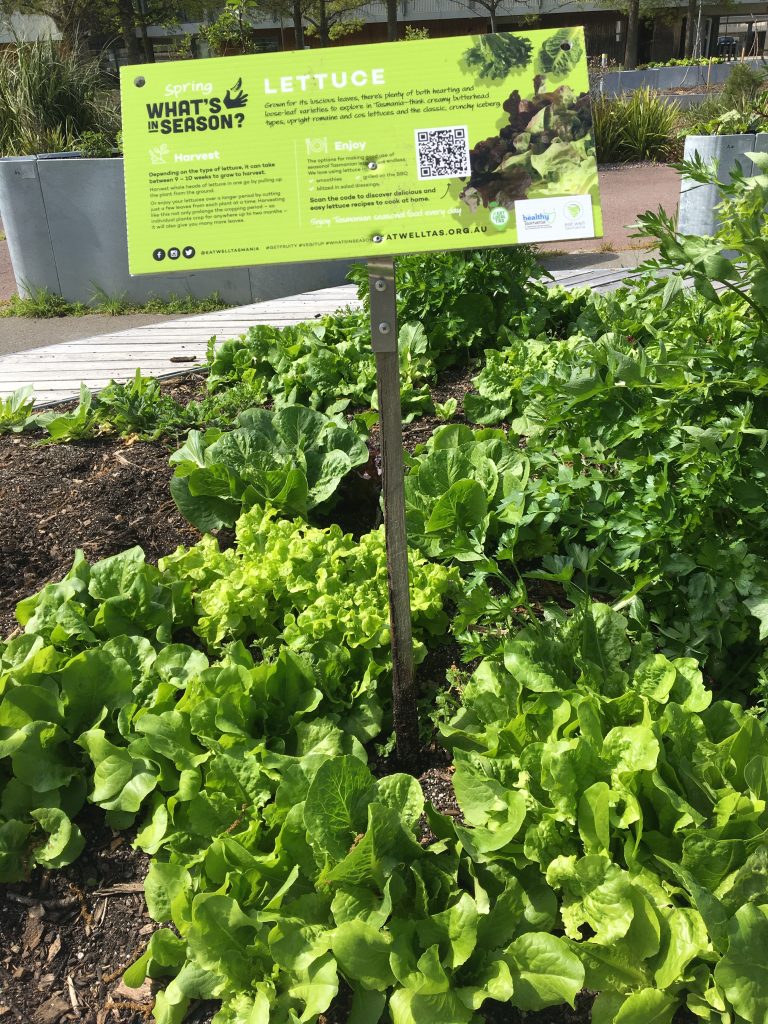
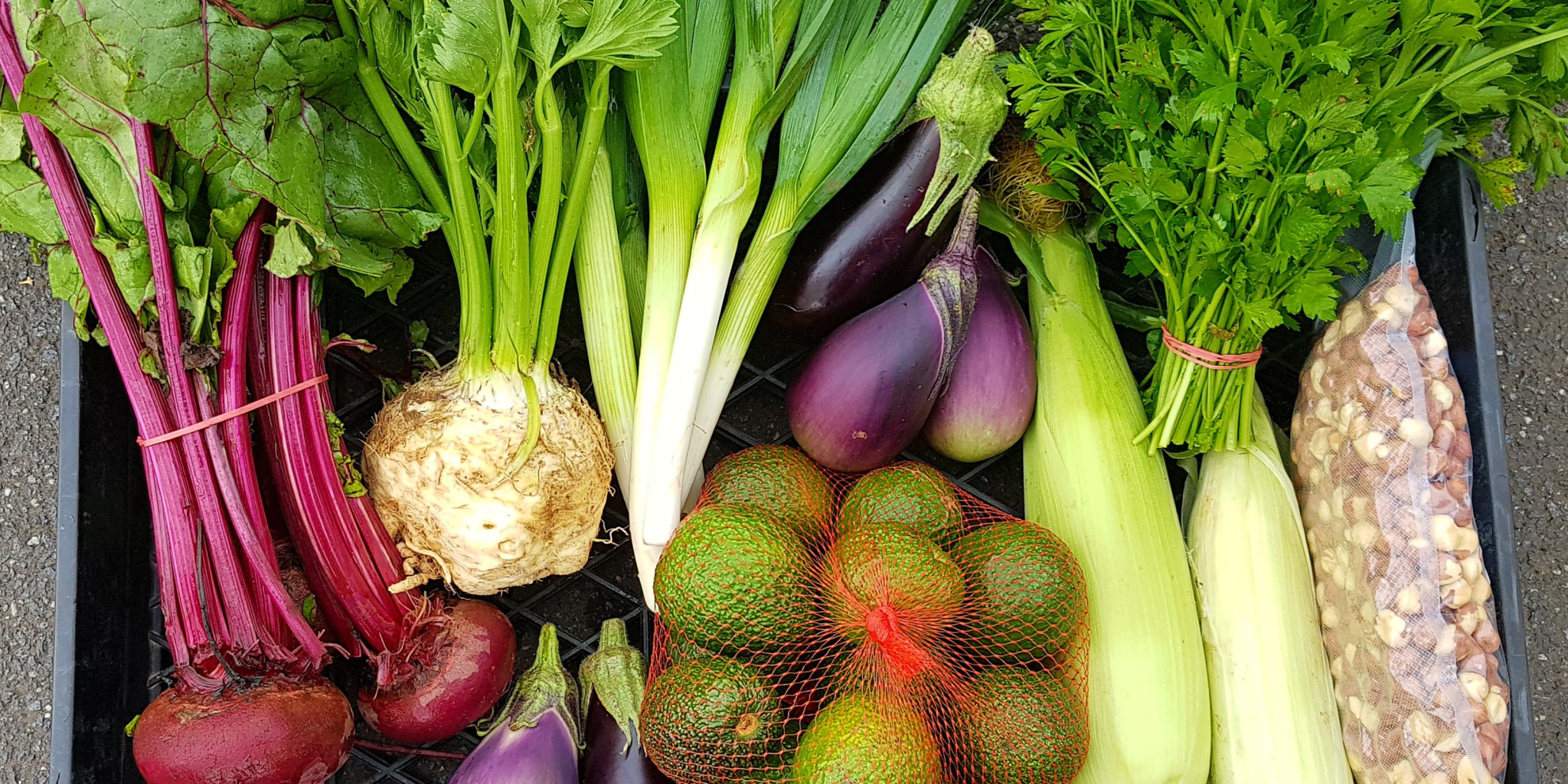
Leafy greens such as lettuce, spinach, silverbeet and kale, and herbs like parsley are ideal for beginners because you can start harvesting leaves almost immediately, without waiting for fruit to develop.
They’re versatile, productive and can save money too.
The cost of one punnet of seedlings can produce many times the amount you’d get in a bag of salad leaves at the supermarket – and you harvest only what you need, reducing waste.
Just for fun… what’s your favourite vegetable?
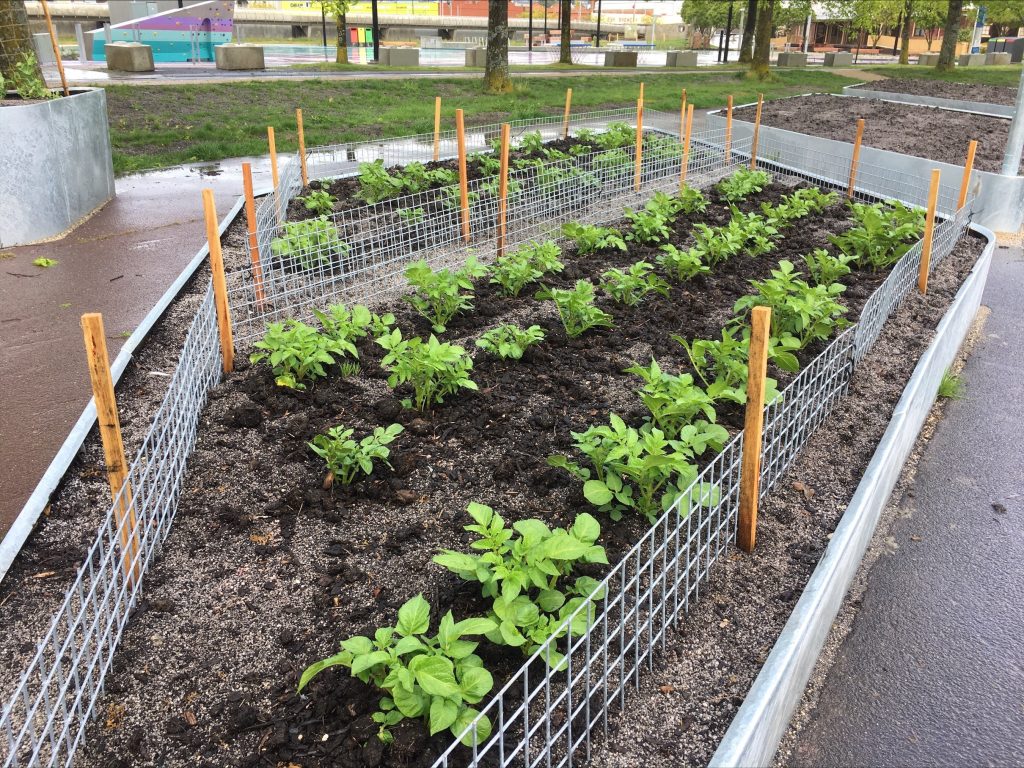
A Pink Eye potato, Tasmania grows beautiful potatoes, and Pink Eyes are hard to beat.
Beans and carrots also receive an honourable mention.
And your favourite fruit?
A perfectly ripe Tasmanian apricot. Fresh from the tree, sun-ripened, juicy, with the juice running down your hands – that’s the best.
The Wrap
The community and student food gardens are part of the University of Tasmania’s Edible Campus Program, which aims to grow a wide variety of food plants across campuses throughout the state.
Where: Find a garden near you